


Friends of Swan Lake Park’s (“FOSLP”) long-term goal is the development of a cost-effective, long-term program for Swan Lake that leads to a self-sustaining ecosystem which supports a stable aquatic habitat, complements the biodiversity of Swan Lake Park and provides direct enjoyment and benefits for all Markham residents.
In December 2025, FOSLP submitted its recommendations for Phase 2 (2026-2030) of Markham’s long-term water quality plan for Swan Lake.
Building off the successes of Phase 1, FOSLP recommended that Phase 2 focus on the remaining critical challenges, namely high levels of algae and chloride and a comprehensive oxygenation program.
To support a comprehensive review of the issues and options, FOSLP was able to raise funds to engage two groups of aquatic biologists from R.J. Burnside and Associates (“Burnside”) and Natural Resource Solutions Inc. (“NRSI”). FOSLP asked for their objective professional perspective on the key issues and for their guidance on the critical next steps.
Burnside was asked to focus on the challenges in developing a sustainable aquatic environment in Swan Lake. They outline the difficulty of restoring aquatic life due the high chloride levels arising from road salt, the current poor water conditions and the shallowness of the lake. Burnside recommended some basic next steps in support of a sustainable aquatic environment.
NRSI submitted two reports:
- A report outlining their specific recommendations on the key elements to incorporate into a comprehensive lake management program plus recommendations on an enhanced program to monitor the aquatic environment and progress on management actions undertaken during Phase 2.
- A review of the complex issues associated with oxygen levels in the lake. Oxygen levels are important for sustaining aquatic life, but low levels can trigger the release of nutrients from the sediments. NRSI addressed these complex issues and outlined the need for a comprehensive oxygenation program and the benefits and issues associated with the various options.
Through FOSLP’s Swan Lake Citizen Science Lab partnership with York University, Dr. Ali Asgari provided an assessment of the water quality throughout 2025 based on an analysis of drone imagery. He was able to detect, quantify, and map the distribution of chlorophyll-a, algal blooms (cyanobacteria) and clarity (turbidity) throughout the summer of 2025. His preliminary key findings were that:
- The degradation in clarity is primarily due to dense, surface-floating algal biomass rather than just suspended sediment.
- The lake experienced two forms of water quality stress during the warm season:
- Spring Peak (May): Widespread algal bloom with evidence of surface scum formation.
- Summer/Fall Persistence (July-Oct): Turbidity improves, but measures indicate chlorophyll remained intensely high, with surface scums around the perimeter. This suggested that the high biomass shifts from a widespread event to a chronic, highly concentrated shoreline and shallow-water problem fueled by persistent nutrient availability.
Kathleen Elizabeth Noel, a local naturalist and FOSLP member who has led FOSLP-sponsored birding tours of Swan Lake Park, requested that the program take into consideration the environmental sensitivity of the shoreline.
The contributor’s reports are listed below with a link providing access to their full reports and FOSLP’s submission.
The following chart summarizes FOSLP’s recommendations for Phase 2.
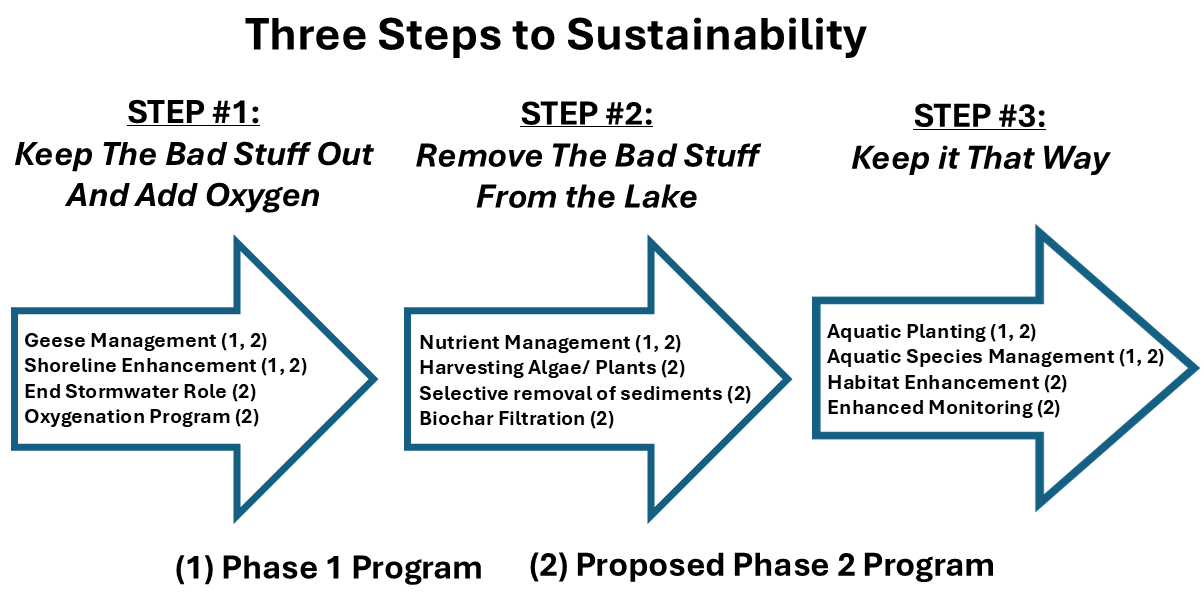
Based on the contributor’s key findings and recommendations, FOSLP’s recommended the following actions during Phase 2:
- A continuation of the Phase 1 nutrient reduction programs such as geese hazing and additional chemical treatments.
- A continuation of Phase 1 programs that directly address high algae and turbidity levels, such as the ultrasound units and aquatic planting.
- Initiation of more specific measures to reduce internal nutrient sources, such as harvesting algae and shoreline plants, and the selective removal of sediments.
- Ending Swan Lake’s stormwater role, by rerouting flows away from the lake. The stormwater is the primary source of chloride that undermines aquatic health.
- Implementation of a comprehensive oxygenation program, including recycling of the water via the North Channel.
- In concert with researchers from York and Trent universities, implement a more comprehensive water monitoring program that measures eutrophic levels, aquatic elements and the progress from specific Phase 2 management actions.
- Re-engage the TRCA for their recommendations on the design of the Phase 2 program and to implement Phase 2 programs for managing aquatic habitat and aquatic life and shoreline enhancements for park visitors.
FOSLP requested that during the review process that Markham host two events:
- A one-day workshop to engage the TRCA, FOSLP’s advisors and Markham’s advisors to discuss the technical challenges and best approaches for addressing the key challenges.
- A public meeting to discuss the proposed Phase 2 plan before it is submitted to Council for approval.
References/ Links to Full Reports
- Submission by Friends of Swan Lake Park, December 4, 2025
FOSLP-Submission_December-3-2025.pdf
- Drone-based Water Quality Monitoring of a Small Urban Lake: Case of Swan Lake in the Greater Toronto Area, Swan Lake Citizen Science Lab, Dr, Ali Asgary, Updated January 2026
SwanLakeWaterQualitywith-Drone-V4-Final-for-Submission.pdf
- Swan Lake Aquatic Conditions Review, R.J. Burnside, November 2025
Swan Lake Aquatic Conditions Review
- Swan Lake Long Term Management Plan, Natural Resource Solutions Inc. November 2025
Microsoft Word – NRSI_3645_Swan Lake Water Quality Peer Review_REV1_26-Nov-25_BEB.docx
- Literature Review of Management Options and Effects of Increased Oxygenation in Swan Lake, Natural Resource Solutions Inc. November 2025
Microsoft Word – NRSI_3645_Swan Lake Oxygenation Lit Review_7-Nov-25.docx