

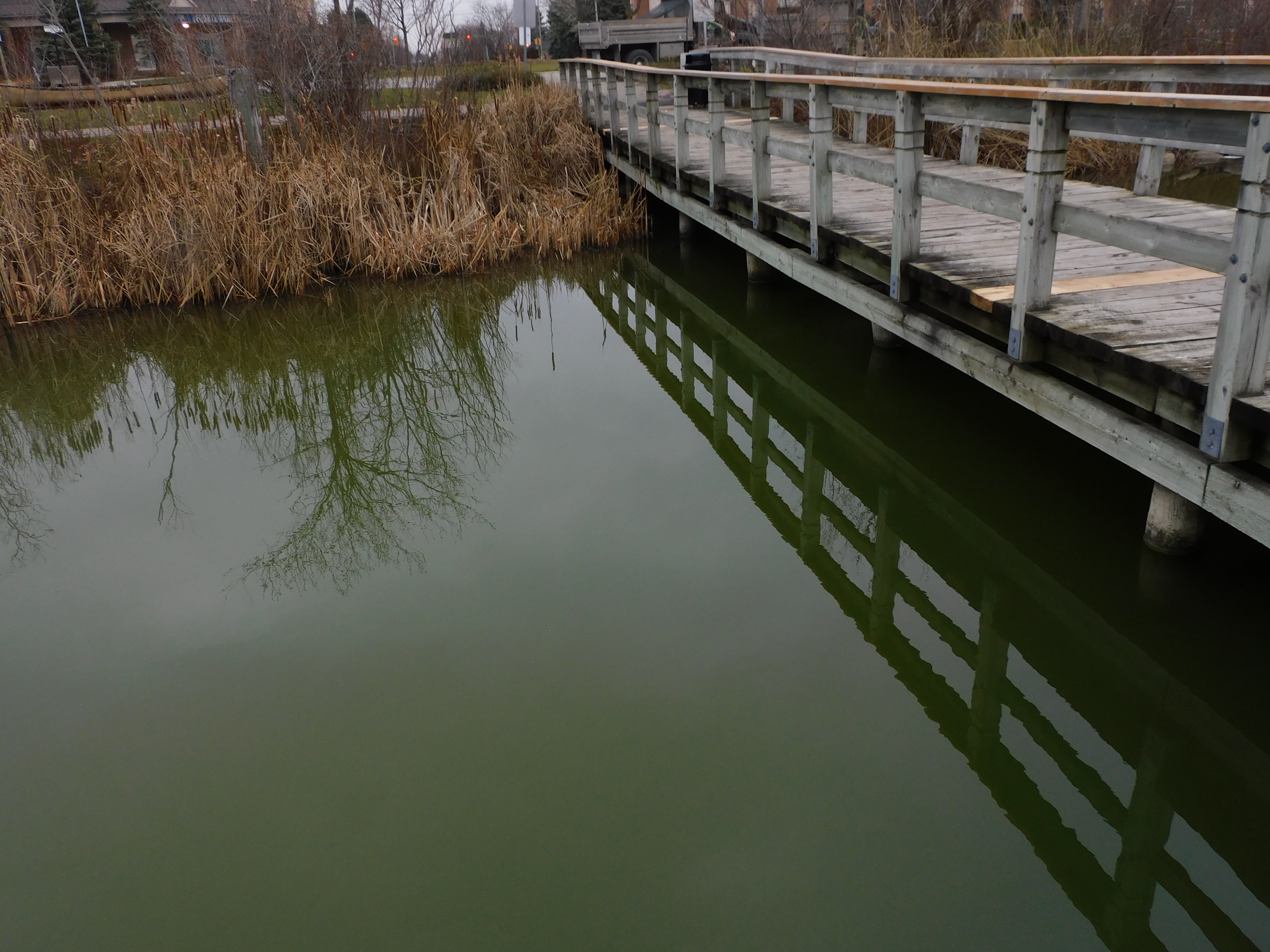
ADDRESSING SWAN LAKE WATER QUALITY ISSUES
Swan Lake, considered a “constructed wetland”, supports a very biodiverse but sensitive ecological system.
There are no streams flowing in or out of Swan Lake so Swan Lake is a unique environmental structure with its own particular set of problems. In 2012, in terms of water quality, Swan Lake was ranked 15 out of 17 man-made urban lakes in Ontario.
Approved Long-term Water Quality Plan Falls Short of Restoration!
In December 2021, Markham Council approved a long-term water quality program that should marginally improve the water quality in Swan Lake, but the aquatic environment will still not be environmentally stable – the death spiral for the lake will continue and necessitate frequent intervention.
In our March 2021 community survey, area residents strongly supported the more challenging “restoration” goal as an important community objective.
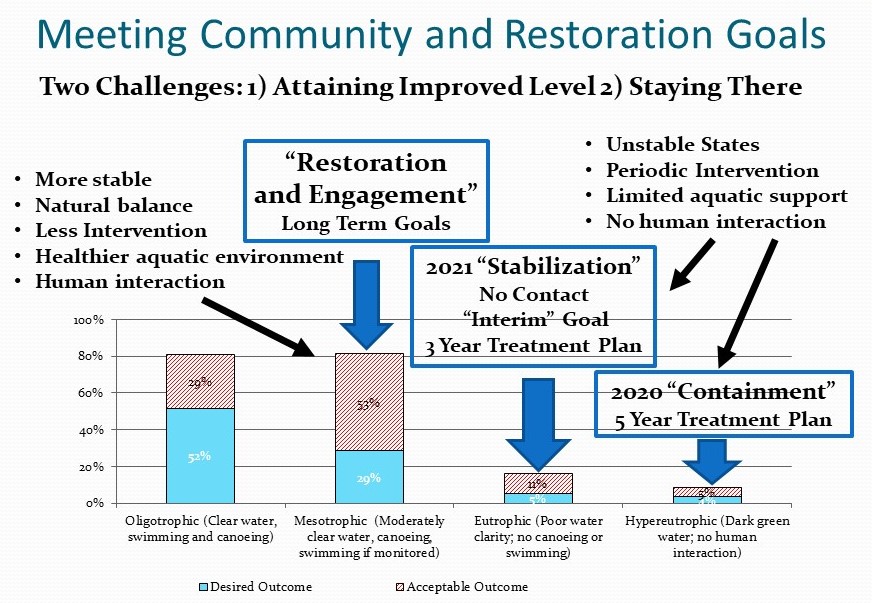
Markham’s current plan focuses on addressing the excessive amount of phosphorus in Swan Lake, attributed primarily to Canada Geese. During the summers of 2021 and 2024 a chemical treatment was applied to reduce the phosphorus content in Swan Lake. The need for continuing treatment will be reviewed in 2026. The initial 3-year treatment cycle is a significant improvement over originally proposed 5-7 year treatment cycle, but this is still not enough to “restore” a healthy aquatic environment.
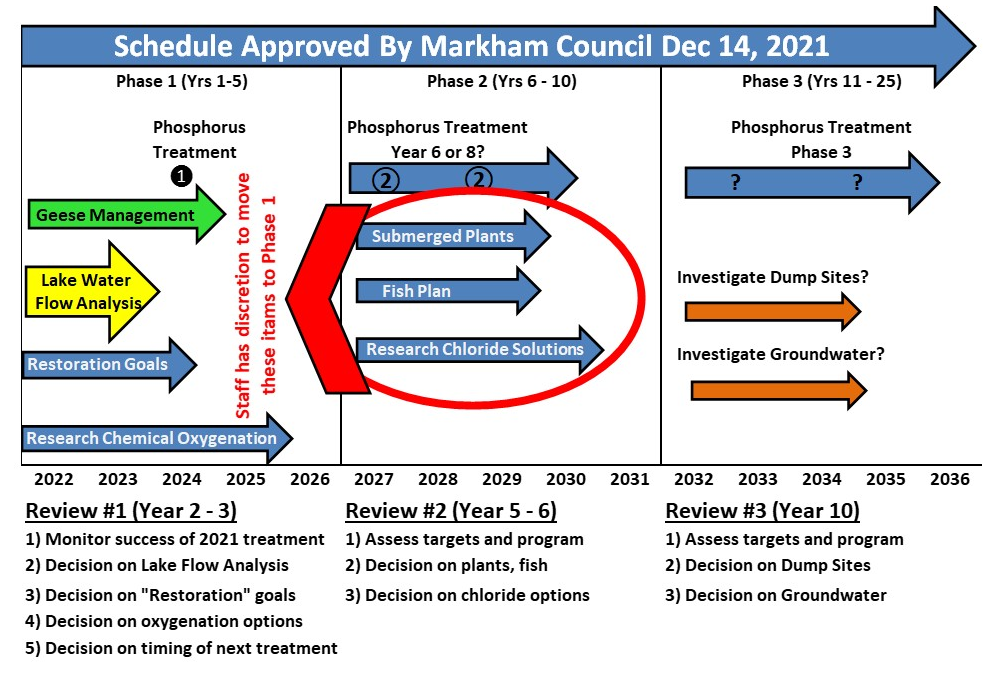
In December 2021, Markham Council approved a long-term plan to improve the water quality in Swan Lake at an estimated cost of $1.7 million over 10 years with total cost of $5.2 million over 25 years but this will not be enough. More effort and more money will be required particularly during the next 10 years.
The following chart summarizes the 25-year plan approved by Council.
More Comprehensive Restoration Program Required
Markham’s current policy also sets out a “no contact” restriction on the use of the lake, meaning no canoeing, kayaking or ice skating. Fishing and a fountain will be restored once water quality improves. FOSLP is asking Markham to establish a long-term goal that will support greater human interaction with the water and has asked Markham to adopt a policy framework comparable to Brampton’s Lake Enhancement strategy.
Unfortunately, Markham’s approved program falls far short of rehabilitation the water quality in Swan Lake, primarily because it is only focused on reducing excessive amount of phosphorus in the lake, the nutrient that fertilizes and stimulates algae growth.
Rehabilitation is tied to addressing two other critical issues in Swan Lake not adequately addressed by the current plan:
- Excessive chloride due to road salt entering the lake.
- That the lake is essentially a “stagnant pond” with naturally very low oxygen levels.
Preliminary Phase 1 Results
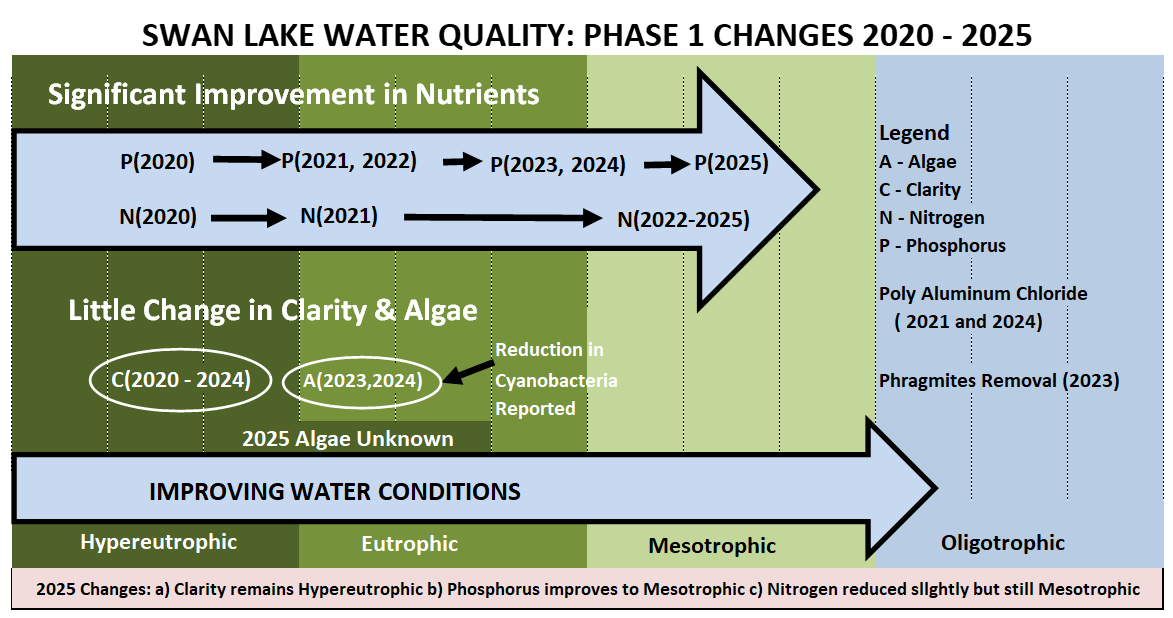
- Reduction in Phosphorus but Limited Reduction in Algae Levels
The preliminary water quality analysis for 2025 shows phosphorus and nitrogen levels have dropped significantly since 2020 to mesotrophic levels, however, there has been only a modest reduction in algae though staff report a 40% drop in microsystins measures.
2. Significant Reduction in Chloride Levels May Indicate Important Role of Aquifer
There was a significant drop in chloride levels from 2020 -through 2024 even though there was no specific action plan included in the city program to reduce chloride levels. Overall, it was a very good but surprising development. The decline in chloride levels may be evidence of the positive influence that groundwater and the aquifer have on the health of Swan Lake.
FOSLP’s Perspective on Phase 1
The Friends of Swan Lake Park acknowledge the significant improvements from the Phase 1 activities, particularly the reduced levels of phosphorus, nitrogen and chloride. While the goals established by Markham for Phase 1 have been met, the water quality and aquatic habitat remain below long-terms goal of sustainable rehabilitation.
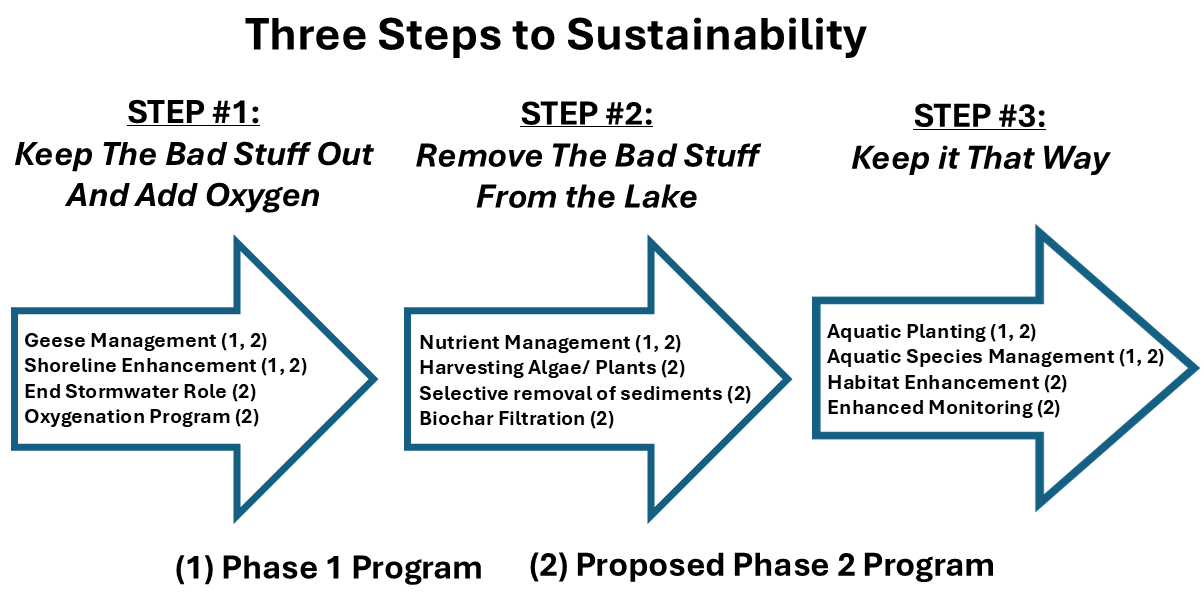
FOSLP has suggested that to be successful the long-term rehabilitation plan should recognize two dimensions to the challenge:
- the undertakings required to improve both the water quality and aquatic habitat, and
- the undertakings required to sustain both the water quality and aquatic habitat over time with minimal human intervention.
Phase 1 experience has illustrated:
- The need to clarify water quality goals in the context of aquatic habitat
- The limitations of a phosphorus-centric program
- That the aquifer and groundwater may be a more significant and beneficial factor than previously thought
In December 2025, FOSLP submitted its recommendations for Phase 2 (2026-2030) of Markham’s long-term water quality plan for Swan Lake.
Building off the successes of Phase 1, FOSLP recommended that Phase 2 focus on the remaining critical challenges, namely high levels of algae and chloride and a comprehensive oxygenation program.